What Happened To John Hancock?
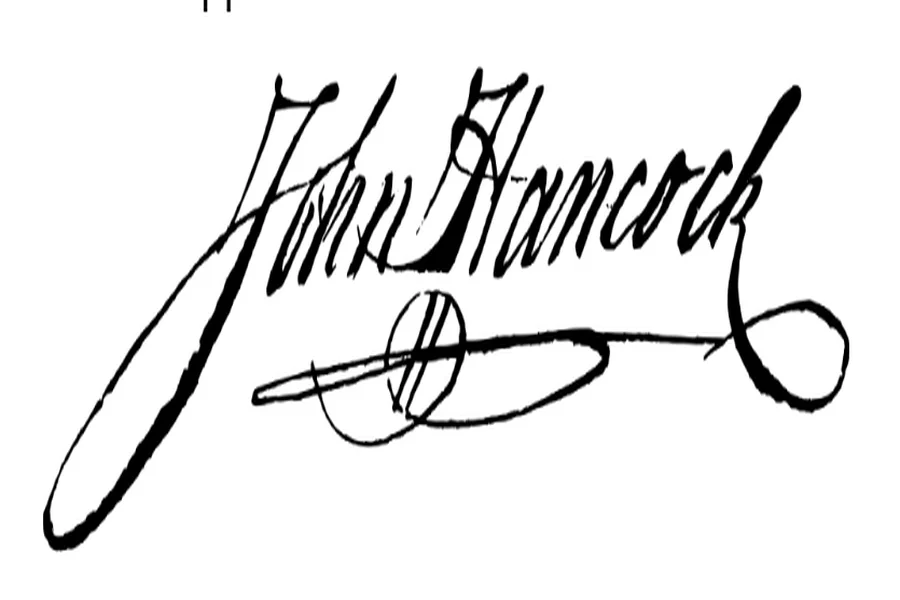
Everybody knows his signature. That bold, sweeping autograph at the top of the Declaration of Independence has become so famous that “John Hancock” is literally synonymous with the act of signing your name. Beyond that one iconic moment, the actual life of John Hancock tends to get glossed over in most history classes.
Hancock was a wealthy merchant, a political firebrand, a wartime leader, and a beloved governor. Today, learn what actually happened to him after that famous signature.
Who Was John Hancock?
Before Hancock became a revolutionary leader, he was already one of the wealthiest men in the American colonies. He inherited a thriving Boston shipping business from his uncle Thomas Hancock, who had built one of the largest mercantile fortunes in New England.
That wealth made his eventual support of the American cause especially significant. Hancock had everything to lose. The British were already targeting him with smuggling accusations long before the Revolution officially began. The 1768 seizure of his ship, the Liberty, sparked riots in Boston and helped solidify his reputation as a patriot leader.
By the time the First Continental Congress convened in 1774, Hancock was a marked man. He and Samuel Adams were the two people Boston’s military governor specifically wanted captured. Paul Revere’s famous midnight ride was, in part, a warning to Hancock and Adams that British troops were coming for them.
President of the Continental Congress
Hancock’s role as President of the Second Continental Congress put him at the center of American resistance during its most critical years. He held the position from May 1775 to October 1777, meaning he presided when the Declaration was adopted on July 4, 1776.
His famous oversized signature wasn’t just a stylistic flourish. As President of Congress, he was the first to sign, and his name needed to represent the official authority of the entire body. The story about wanting King George III to read it without spectacles is more legend than fact, but the boldness reflects something true about Hancock’s character.
During his time as Congress President, he coordinated with George Washington, managed tensions among the colonies, and helped hold together a fragile coalition during the war’s most uncertain phase. The work eventually wore him down.
Governor of Massachusetts
After leaving the Continental Congress, Hancock returned to Massachusetts, where he was elected the state’s first Governor in 1780. He would serve nine total terms, making him the most popular politician in Massachusetts history during the founding era.
His governorship wasn’t without controversy. He clashed with John Adams over various policy issues, and his health problems sometimes affected his ability to execute the duties of office fully. But the people of Massachusetts adored him.
Hancock’s popularity stemmed partly from his genuine connection with ordinary citizens. Despite his enormous wealth, he had a common touch that resonated with voters. He used his personal fortune to fund civic projects and supported veterans of the Revolutionary War.
For modern Americans who like to display their love of country with patriotic shirts or other commemorative items, Hancock represents an early version of that same impulse to wear American identity proudly.
John Hancock’s Role in the Constitutional Convention
Hancock’s role in ratifying the U.S. Constitution is one of the more underappreciated aspects of his legacy. Massachusetts was a critical battleground for ratification, and the state convention was deeply divided.
Hancock initially seemed lukewarm on the Constitution, but he eventually used his influence to broker a compromise that allowed Massachusetts to ratify while proposing amendments that would later become the Bill of Rights. This approach was then adopted by other states and helped secure ratification nationwide. Without Hancock’s intervention, the Constitution might not have gained enough state support to take effect.
He briefly considered running for President of the United States but ultimately stepped aside in favor of George Washington. His health was already in serious decline.
What Did John Hancock Do After Signing the Declaration?
Hancock’s health had been deteriorating for years by the time of the Constitutional Convention. He suffered from severe gout, a painful condition that became increasingly debilitating as he aged. By the early 1790s, he was often unable to walk and sometimes had to be carried into legislative sessions in his role as Governor.
Despite his physical decline, Hancock remained Governor of Massachusetts until his death. He continued to engage with public affairs and host visitors at his Beacon Hill mansion. The man simply refused to step away from the work that had defined his life.
John Hancock died on October 8, 1793, at the age of 56. His funeral was one of the largest public events in Boston’s history up to that point, with thousands of people lining the streets to pay their respects. He was buried in the Granary Burying Ground in Boston, where his grave remains a popular stop for visitors interested in American history.
John Hancock’s Legacy
Hancock’s legacy is bigger than that famous signature, but the signature has become so iconic that it sometimes overshadows everything else. He was a wartime leader, a beloved governor, a critical figure in the ratification of the Constitution, and a public servant who worked himself to the bone for the country he helped create.
The next time someone asks you to “put your John Hancock” on something, remember the man behind the name. He earned every bit of that lasting fame.