The Many Uses Of Ultrasonic Cleaners: Why This Technology Has Become Indispensable
Ultrasonic cleaners have evolved from specialized industrial tools into widely used devices across numerous fields. Their ability to clean delicate, complex, or hard-to-reach surfaces with extraordinary precision makes them an appealing solution for professionals and hobbyists alike. Using high-frequency sound waves to create microscopic bubbles that gently remove contaminants, ultrasonic cleaners provide a level of thoroughness that traditional methods can rarely match. As industries increasingly value precision, efficiency, and safety, these machines have earned an essential role across different sectors.
Medical and Dental Applications
One of the most critical uses for ultrasonic cleaners is in the medical and dental fields, where hygiene and sterilization are non-negotiable. Scalpels, forceps, dental mirrors, drills, and orthodontic tools all contain tight crevices where contaminants can hide. Manual cleaning risks cross-contamination and can damage sensitive instruments.
Ultrasonic cleaners solve these problems by removing blood, tissue residue, plaque, and other debris without harsh scrubbing. Because the process is non-abrasive, it preserves the life of precision tools. While ultrasonic cleaning does not replace sterilization, it significantly improves the effectiveness of subsequent autoclaving or disinfecting procedures. In busy clinics and hospitals, this technology helps maintain workflow efficiency while ensuring patient safety.
Jewelry and Watchmaking
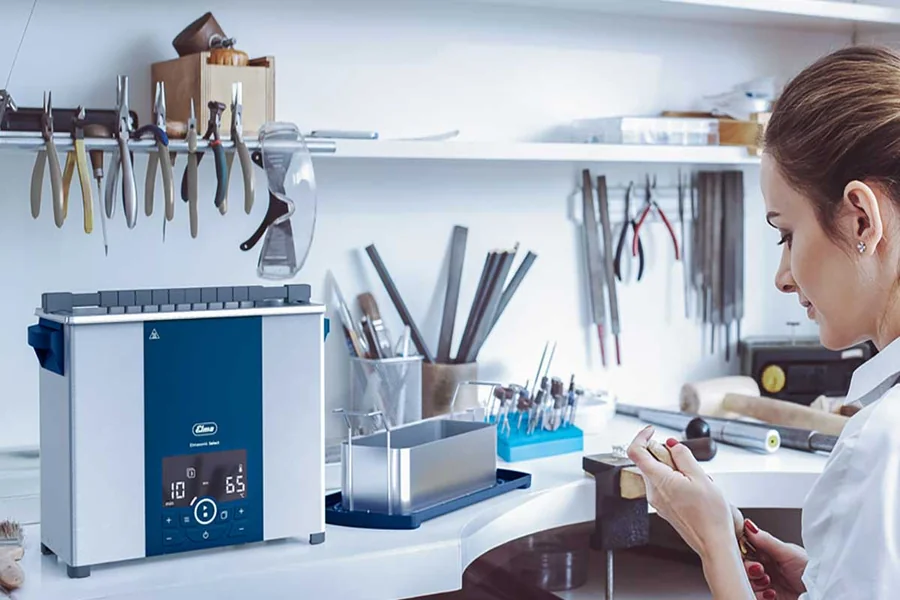
The jewelry industry relies heavily on ultrasonic cleaners because of their unmatched ability to restore sparkle and brilliance. Jewelry pieces often accumulate oils, skin residues, dirt, and cosmetic buildup that settle into prongs and under gemstones. Traditional polishing may restore surface shine, but it cannot reach the microscopic areas beneath mounted stones.
Ultrasonic cleaners safely dislodge grime from gold, silver, platinum, diamonds, and other hard gemstones. Jewelers often use the machines prior to repairs or inspections to ensure a completely clean surface. Watchmakers also benefit, using ultrasonic cleaning to remove old lubricants from gears and movement components. The precision cleaning process helps maintain accuracy, reduces wear, and supports proper reassembly.
Automotive and Mechanical Workshops
In automotive repair, ultrasonic cleaner is invaluable for restoring carburetors, fuel injectors, pistons, valves, and small engine components. These parts are notoriously difficult to clean by hand due to tiny passages that become clogged with carbon, varnish, or fuel residue. Ultrasonic waves penetrate each cavity evenly, ensuring that contaminants are removed completely.
For mechanics, the technology reduces labor time, improves performance, and minimizes the risk of accidental damage. Even tools such as sockets and wrenches can be cleaned quickly and thoroughly. Many automotive restoration specialists rely on ultrasonic cleaners to preserve vintage or delicate engine parts that cannot withstand abrasive blasting.
Laboratories and Scientific Research
Scientific laboratories use ultrasonic cleaning for glassware, precision instruments, pipettes, and other equipment that must remain contaminant-free. Any residue, however small, can compromise experiments or lead to inaccurate results. Ultrasonic cleaners provide consistent, repeatable cleaning while reducing the need for harsh solvents.
They are also used to degas solutions—removing dissolved gasses from liquids before they are used in chemical reactions or analytical tests. This improves accuracy and speeds up processes such as chromatography. For researchers who require pristine conditions, ultrasonic cleaning provides reliability and control.
Electronics and Circuit Boards
As electronics become smaller and more complex, safe cleaning methods are increasingly important. Ultrasonic cleaners can remove flux, dust, oils, and oxidation from circuit boards without causing physical damage. This makes the technology particularly useful for electronics repair shops, refurbishers, and manufacturers.
However, care must be taken to use appropriate cleaning solutions and drying procedures to prevent moisture-related damage. When used properly, ultrasonic cleaning improves circuit reliability and appearance while extending component life.
Firearm Maintenance
Gun owners and professional armorers use ultrasonic cleaners to maintain firearms efficiently. Powder residue, carbon buildup, and lubricants can accumulate in grooves and small parts, making thorough cleaning challenging. Ultrasonic cleaners break down deposits quickly and evenly, making the process safer and less labor-intensive.
After cleaning, components can be dried and lubricated for optimal performance. This method is especially valuable for law enforcement and military personnel who must maintain reliability under demanding conditions.
Household and Hobbyist Uses
Beyond professional environments, ultrasonic cleaners have found a place in homes and workshops. Hobbyists use them to clean airbrushes, fountain pens, coins, model parts, and small mechanical items. Homeowners use ultrasonic cleaners for eyeglasses, razors, dental appliances, and even baby items like pacifier parts.
Their versatility and ease of use make them appealing for anyone who wants to simplify cleaning tasks or restore items to like-new condition.